When Knowing Isn’t Enough

Forked paths lead toward churches beneath sunrise and moonlight, with book and anchor

There is a version of Christianity that can look remarkably faithful from a distance.

You know what Christians are supposed to believe. You know what Christians are supposed to reject. You avoid the bad things. You affirm the good things. You know which boxes to check.

And yet, you can do all of that without developing much wisdom for actually living as a Christian.

That becomes a problem because most of life does not arrive in neatly labeled boxes.

The difficult coworker isn’t a theological proposition. Neither is the neighbor whose life looks completely different from yours. Neither is deciding what to do with your money… responding when someone wounds you… navigating a difficult cultural question… raising children… handling disagreement… or knowing when to speak and when to remain silent… or so much more.

Those things require more than knowing which answers are Christian.

They require discernment.

That is something Paul specifically prayed believers would develop:

“And it is my prayer that your love may abound more and more, with knowledge and all discernment, so that you may approve what is excellent.” – Philippians 1.9-10

Notice the connection: love, knowledge, and discernment.
Paul wanted believers who knew the truth – and who were increasingly able to recognize what faithfulness to that truth looked like in the complexities of actual life.

Because biblical truth is meant to give us a way of seeing the whole world.

Scripture teaches us who God is, who we are, what has gone wrong with this world, what God values, what sin does to us, what people desperately need, and what ultimately matters.

And then we have to learn to live accordingly.

Without that kind of discernment, Christians can drift toward two very different extremes.

Some are seduced by the world.

They may know biblical truth, but they have never learned to think biblically about the world around them. So when complicated questions arise, the world supplies the categories. Its assumptions gradually become their assumptions. Its definitions of success, happiness, identity, sexuality, money, freedom, and the good life begin to feel perfectly reasonable.

Others become cocooned from the world.

They preserve their Christian answers by keeping everything complicated safely outside. They know what they oppose. They know what they don’t watch. They know where they don’t go. They know which people are wrong.

Their convictions may remain intact. But those convictions increasingly have little contact with anyone or anything outside the cocoon.

Neither is Christian discernment.

Discernment asks a harder question:
* What does faithfulness to God look like right here?
* Not merely, What am I supposed to believe about this?
* But how should what I believe change how I respond?
* How does the gospel shape the way I treat this person?
* What does obedience to God require of me in this decision?
* What desires are driving me?
* What assumptions have I accepted without examining them?
* How can I demonstrate both truth and love here?

That is very different from checking boxes.

We desperately need Christians whose minds are so saturated with Scripture that they can recognize the world’s lies without being terrified of the world.

Christians whose convictions are strong enough to resist cultural pressure, but whose love is strong enough to move toward people rather than away from them.

Christians who don’t merely know what the Bible says, but are learning how God’s truth bears upon conversations, relationships, decisions, disappointments, opportunities, temptations, and ordinary responsibilities.

So perhaps the question isn’t simply: Do I believe the right things?

We should.

But there is another question worth asking: Am I learning to live wisely because I believe them?

Grace assumes the best; pride suspects the worst.

Pride is remarkably confident about other people’s motives.

“He did that because…”

“She only said that because…”

“I know what they’re really trying to do…”

But most of the time, we don’t know.

Grace does not ignore sin or pretend that evil is good. But neither does it manufacture motives, presume guilt, or fill gaps in our knowledge with suspicion.

Grace asks before accusing.

Grace leaves room for explanation.

Grace is willing to believe the best that the facts will allow.

And when something truly is wrong, grace grieves rather than delights in having its suspicions confirmed.

Love does not require us to ignore sin.

It does require us to stop inventing it.

“Love… is not resentful… bears all things, believes all things, hopes all things, endures all things.” – 1 Corinthians 13.5, 7

Still My Favorite Love Story

Thirty-three years ago today, a young man and a young woman stood before God, surrounded by family and friends, and promised one another a lifetime.

Like every young couple, we had plans. We had dreams. We wondered where life would take us.

We talked about children – possibly two or three… maybe four if we were feeling especially adventurous.

We smiled at the future because we imagined we knew what it might look like. We didn’t. Not even close.

We had no idea that God would entrust us with eight wonderful children. We had no idea that one day our home would be filled with laughter, music, muddy shoes, backpacks, late-night conversations, birthday parties, grandchildren, and more memories than either of us could ever count.

We had no idea how many miles we would travel together. How many churches we would serve. How many prayers we would pray. How many tears we would quietly wipe away.

How many times we would find ourselves standing in hospital rooms, sitting beside grieving families, rejoicing at weddings, celebrating new life, or simply holding one another after another long day.

Looking back now, I realize something. We spent a lot of time making plans. God spent all along writing a far better story.

One of His greatest gifts to me was Jenny.

Most people know her as sweet – and they are absolutely right. She is. But they don’t always get to see the whole picture.

They don’t know how quick she is with a comeback. How delightfully sharp her sense of humor can be. Or that every now and then she can say something so unexpectedly funny that I find myself laughing long after everyone else has moved on.

They don’t always know that after thirty-three years she still has the remarkable ability to roll her eyes at one of my jokes with perfect timing. (It is still my opinion that the audience is occasionally the problem.)

I still love her beautiful red hair.

I still love her smile.

I still love the sparkle in her eyes.

And yes… after all these years, we still enjoy “sporting” together.

Some things simply get better with time.

But if all I said were those things, I would miss what I admire most. I have watched Jenny quietly pour herself into people for decades.

She loves children – not because she has to, but because she genuinely delights in them. She notices widows. She encourages women. She serves our church without seeking attention. She sings God’s praises with sincerity. She opens her Bible faithfully. Again and again, I have watched her choose faithfulness in all the ordinary places where character is truly formed.

The world often celebrates the loud and the impressive. God delights in the faithful.

That is the woman I married.

There is one more thing I want to say – something that perhaps very few people know.

There have been seasons when I have felt weary. Moments when leadership felt heavy. Days when I questioned myself more than I questioned anyone else. And in those moments, God has often strengthened me through Jenny.

Her confidence in me has steadied me. Her affection has comforted me. Her prayers have upheld me. Her quiet faith has reminded me to trust the Lord again. She probably doesn’t even realize how many times God has used her to help me stand when I felt weak.

For that, I will always be grateful.

When I married Jenny, I thought I was choosing the woman who would make my life happier. Thirty-three years later, I realize God was giving me the woman who would help make me more like Christ. That is a far greater gift.

Jenny… Thank you for believing in a young man who had more enthusiasm than wisdom.

Thank you for walking beside me through every season God has ordained. Thank you for laughing with me. Praying with me. Forgiving me. Encouraging me. Serving with me. Growing with me.

Most of all, thank you for loving Christ more than you have ever loved me. That has been one of the greatest blessings of my life.

If someone were to ask me whether I would do it all again – knowing every joy, every hardship, every surprise, every blessing, and every sorrow these thirty-three years would hold…

My answer would be immediate. Without hesitation. Without reservation. Without changing a single thing that brought me to this moment beside you.

I would still choose you.

Thirty-three years ago, I thought I was inviting you to share my life. Looking back, I realize God was inviting both of us into a story that neither of us could have imagined. And what a beautiful story it has been.

Happy Anniversary, my love.

Thank you for thirty-three wonderful years.

By God’s grace, I look forward to whatever chapters He is pleased to write next.

Happy Birthday, Jenny [July 8]

Happy Birthday to my beautiful wife, Jenny!
I have been studying this woman for a very long time now, and after nearly 33 years of marriage, I have reached a few fairly definitive conclusions.
First, I love red hair. I mean, I probably love red hair because I love her red hair … but at this point, I’m not sure the two can be separated. She is, after all, my standard for beauty.

I love her smile. I love her affection. I love her wisdom and her wit. Everyone thinks Jenny is so sweet – and she is. She really is. But I also know the Jenny who can be quick with a comeback, sharp with her teasing, and who can, on occasion, come up with something so unexpectedly salty and silly that I’m left wondering, “Where in the world did THAT come from?” 😂

She makes me laugh. Sometimes she laughs at my jokes. Sometimes she just rolls her eyes. Which I have learned to accept: the problem in those moments is obviously with the audience. Honestly, I love that after all these years, we still laugh together. We still flirt with each other. We still enjoy “sporting,” as the Bible calls it. 😏

But there is so much more to this woman I love. I watch her pour herself out for others every day.
She loves children – all children.
She cares deeply about the women in our church.
She notices the widows and loves on them.
She serves. She sings. She gives. She cares.
And before so many others ever receive anything from her, she faithfully spends time with the Lord. I see that too. I see the woman everyone else sees – the beautiful, sweet, caring Jenny.

But I also get to see more. I get to see:
The funny Jenny.
The affectionate Jenny.
The feisty Jenny.
The tired Jenny.
The praying Jenny.
The woman who has poured out so much of herself for so many people for so many years.

And I get to experience something that perhaps no one else fully sees: This woman makes me stronger.
There are times when I feel weak, uncertain, or lacking godly confidence – and somehow her love, her affection, her presence, her respect & care toward me – help me stand firm and stand tall. I don’t know if she even knows how often she does that. So on her birthday, I don’t merely want to thank her for everything she does. I want to celebrate her.

Jenny, I still notice you.
I still admire you.
I still enjoy you.
I still want to be near you.
Your red hair still catches my eye.
Your smile still feels like home.
Your affection still means more to me than I can say.
And after all these years, I am still crazy about you.
Happy Birthday to my beautiful, funny, sweet, occasionally salty, eye-rolling, redheaded wife.
You are my delight and my treasure – my “So Much.”
And yes, my love… I am still very interested in “sporting” with you, and I don’t care who else notices or sees. ❤️😂
Happy Birthday, Jenny.
I love you.
X♥️X♥️

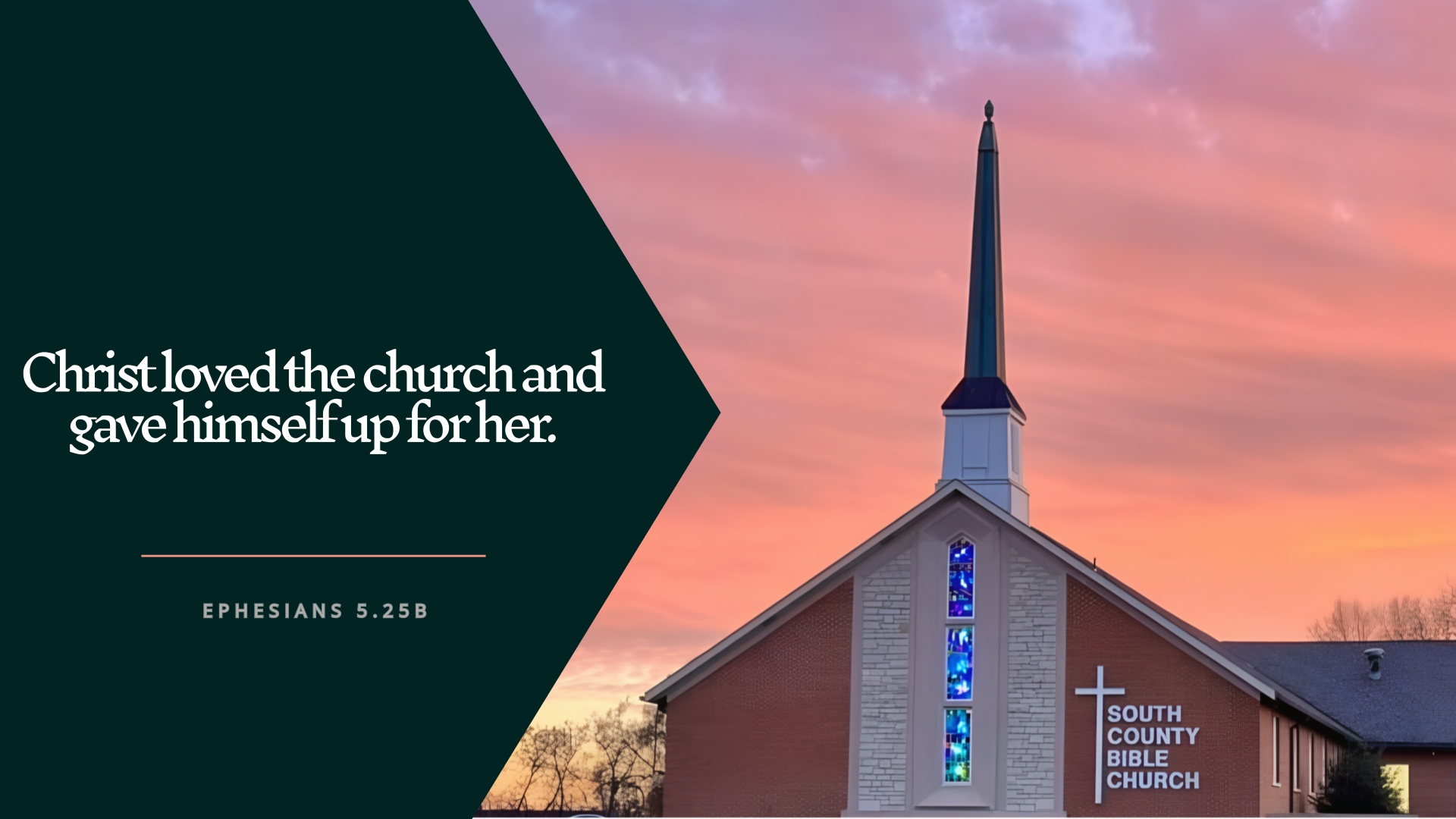
The Church Christ Died For

“…Christ loved the church and gave himself up for her.” – Ephesians 5.25b

The church is not merely a building we attend or a gathering we observe. Scripture tells us it is something Christ loved so deeply that He gave Himself up for her. He shed His blood for the church.

That truth should shape how we think about the church, how we speak about her, and how we participate in her life.

Charles Spurgeon once warned that while the church is not perfect, it is dangerous to take pleasure in pointing out her flaws. Christ sees every weakness in His church far more clearly than we ever could and yet He loves her still. He covers her with His love and cleanses her by His blood.

Which means when we criticize the church carelessly, withdraw from her casually, or treat her as optional, we are treating lightly what Christ holds as precious.

Loving the church does not mean pretending she is perfect. It means committing ourselves to her. It means serving, forgiving, worshiping, giving, and growing alongside imperfect people just as Christ has done with us.

If Jesus loved the church enough to give His life for her, then we should love the church enough to give our time, our hearts, and our faithful presence.

Let your love for Christ be seen in your love for His church this Sunday.

Go hug your wife.

How-To-Love-Your-WifeGentlemen: Your responsibility in your marriage is not contingent upon how well your wife fulfills hers.

Joy is loving and serving and delighting in your best friend – for the glory of God alone.

Go hug your wife.

“Let your clothes be white all the time, and let not oil be lacking in your head. Enjoy life with the woman whom you love all the days of your fleeting life which He has given to you under the sun; for this is your reward in life and in your toil in which you have labored under the sun.” Ecclesiastes 9:8-9